what kind of bearing do i need to fix an rv furnace
People may bask RV travel because they can explore the outdoors while maintaining the comforts of indoor living. Beyond the shelter an RV provides, appliances similar a furnace make those outdoor explorations even more enjoyable. Merely what exercise y'all practise when you flip on the furnace, and at that place'due south no heat? This is when RV furnace troubleshooting can save the day.
Table of Contents
- How Does an RV Furnace Work?
- RV Furnace Diagnostic Lights and Codes for Troubleshooting
- Common RV Furnace Problems (and How to Troubleshoot)
- The Fan Runs, only There's No Oestrus
- How to Troubleshoot
- The Furnace Stops and Starts
- How to Troubleshoot
- Thermostat at Set Temperature, But Furnace Doesn't Shut Off
- How to Troubleshoot
- Furnace Non Working on Bombardment (vs. Shore Power)
- How to Troubleshoot
- Weak Air Menses Through Vents
- How to Troubleshoot
- Furnace Fan Makes Loud Noises
- How to Troubleshoot
- The Fan Runs, only There's No Oestrus
- When Should You Call a Repair Service?
- RV Furnace Troubleshooting:
How Does an RV Furnace Work?
The first step in troubleshooting an RV furnace is understanding its cardinal operation.
Using your RV thermostat to plow on the furnace won't immediately blow warm air into your rig. This is by design. It's actually a safety mensurate to prevent noxious gases from entering your rig.
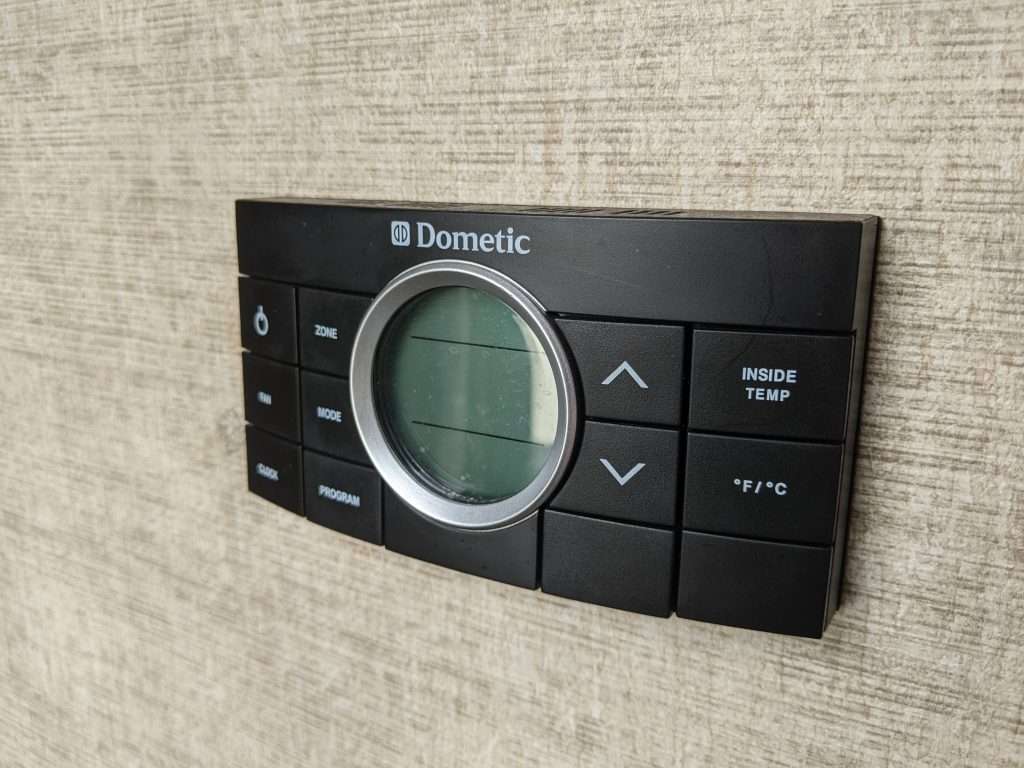
When turning on the thermostat, several things happen in rapid succession. Permit'south take it in ho-hum motion:
Starting time of all the furnace fan kicks on. The fan both blows air around within the RV and sometimes forces air through the frazzle pipe. With the fan running information technology moves a "sail switch" that signifies to the command board that there is airflow. It takes virtually 15 seconds or so for the control board to sense the airflow and start the ignitor process. It starts the ignitor only before the gas valve opens, allowing propane to flow into the combustion sleeping room.
The combustion chamber ignites the mixture of propane and oxygen. The ignited combustion sleeping room heats the air as the heat exchanger pulls in warm air and blows information technology through the ductwork.
When the air temperature reaches the thermostat setting, the system stops the heating process until the rig temperature drops. And the wheel starts once again.

➡ Looking for more data? Check out The Beginner's Guide to RV Furnaces for a full rundown on this essential winter camping apparatus.
RV Furnace Diagnostic Lights and Codes for Troubleshooting
When it comes to diagnostic lights and codes on an RV furnace, information technology'south more important to know what they are and how they piece of work than to memorize specific numbers and letters.
Most newer furnaces take a diagnostic light on the side. The excursion lath sends signals much like morse code; the number of blinks identifies the lawmaking. A chart somewhere on the furnace should tell you lot how to interpret the diagnostic lights.
If there'due south an issue with your furnace, the diagnostic light flashes. Y'all then wait up the corresponding fault lawmaking on the chart, which helps you zero in on the exact upshot.

Mutual RV Furnace Problems (and How to Troubleshoot)
Numerous bug tin arise with an RV furnace. Beneath, we list the most mutual RV furnace problems and how to troubleshoot them.
The Fan Runs, but There's No Oestrus
Usually, if the blower fan turns on but no heat comes out, you're dealing with a fuel, ignition or circuit board effect.
How to Troubleshoot
Fuel: First thing check your fuel supply. Brand sure your propane is turned on and has force per unit area. You can check for pressure by turning on your stove or another appliance that uses propane. This is i of the about common causes for a furnace not to ignight.
Battery Voltage: The blower fan can operate on low battery ability, simply the combustion chamber tin can't ignite if the voltage is besides low for the fan to initiate the sail switch. Typically, if your RV battery dips to 10.5 volts, the furnace won't operate. Recharging the battery is ordinarily enough to regain adequate voltage.
Pro Tip: Install an RV battery monitor in your camper to monitor your voltage and forestall discharging your battery too low.
Air blows common cold but RV furnace doesn't low-cal
Airflow: Another common problem is insufficient airflow, usually from a blockage in the air intake. Things that can cake your air intake include leaves, bugs, or other critters, nests, or debris. Cleaning out the intake is the quick set up to this issue. Regularly cleaning the air intake is also a good addiction for regular furnace maintenance.
Canvas Siwtch:A failed canvas or limit switch is some other common culprit, as are corroded or loose fittings. Other issues include a declining gas valve, too much or too fiddling pressure in the propane tank, or a declining ignition control circuit board. Some of these are quick fixes, while others might require professional person repair.
Ignitor: You should be able to hear the furnace ignitor clicking away when attempting to ignite the fuel. If you exercise not hear the clicking of the ignitor its possible there is a problem with the ignition circuit. First, check the sheet switch as mentioned above, then take a await at the high voltage ignitor circuit. You can usually check the relay for the ignitor at the circuit board and see if its supplying ability when it starts upwardly. If and so, merely the ignitor is non firing, its possible you have a bad ignitor coil.
Did You Know? An RV propane regulator helps control your propane tank's pressure.
The Furnace Stops and Starts
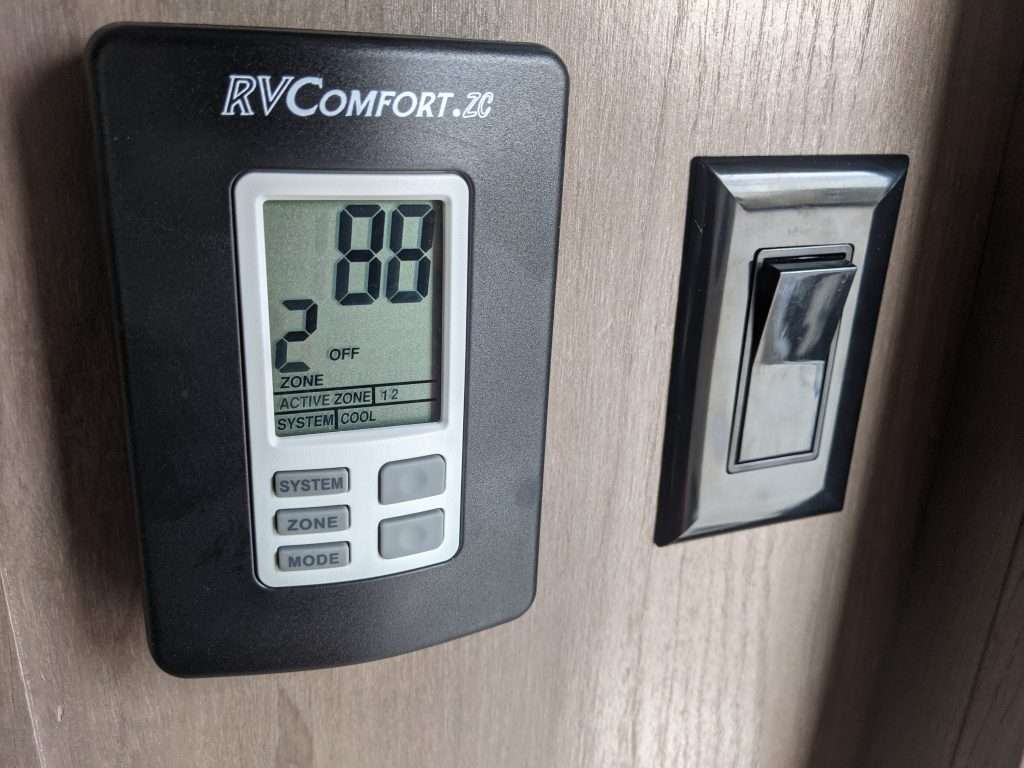
If the furnace constantly stops and starts when it shouldn't, there are ii common reasons: a faulty thermostat or an issue with the environment around your thermostat. If warm air hits the thermostat directly, the device will register the desired room temperature and shut off, even though it's just warm in that i spot.
How to Troubleshoot
If the thermostat is faulty, but replace it. New devices are affordable, and every bit long as you replace information technology with an identical model, yous probably won't need a technician. When removing the one-time thermostat, take pictures of all the connections and so y'all can reconnect the new wires in the same order.
A duct register pointing at the thermostat could crusade it to shut off prematurely. Redirecting the register abroad from the thermostat should aid.
You lot might run across the same consequence if the thermostat is near a window or door with a leaky seal. Other areas of the business firm can besides run warm, and a thermostat placed too close could cause room temperature issues. For example, your refrigerator or oven tin generate heat that affects your thermostat settings.

Pro Tip: Plough on your RV ceiling fan (or install a new 1!) to assistance circulate warm air throughout your RV in the winter.
If possible, move your thermostat away from the warmer areas of your RV.
Thermostat at Set Temperature, Simply Furnace Doesn't Shut Off
If the rig has reached the desired temperature but the furnace fails to close off, the thermostat will request more rut from your furnace. This can create rather mild conditions in your rig.
How to Troubleshoot
To troubleshoot this RV furnace problem, utilise a multimeter to check the voltage from the thermostat to the time delay switch. If voltage is present, the thermostat has failed. If there is no voltage, in that location's a short somewhere in the organization.
➡ We always keep a multimeter in our RV took kit. Notice out what other tools we carry here: 36 Important Tools You Need In Your RV Tool Kit
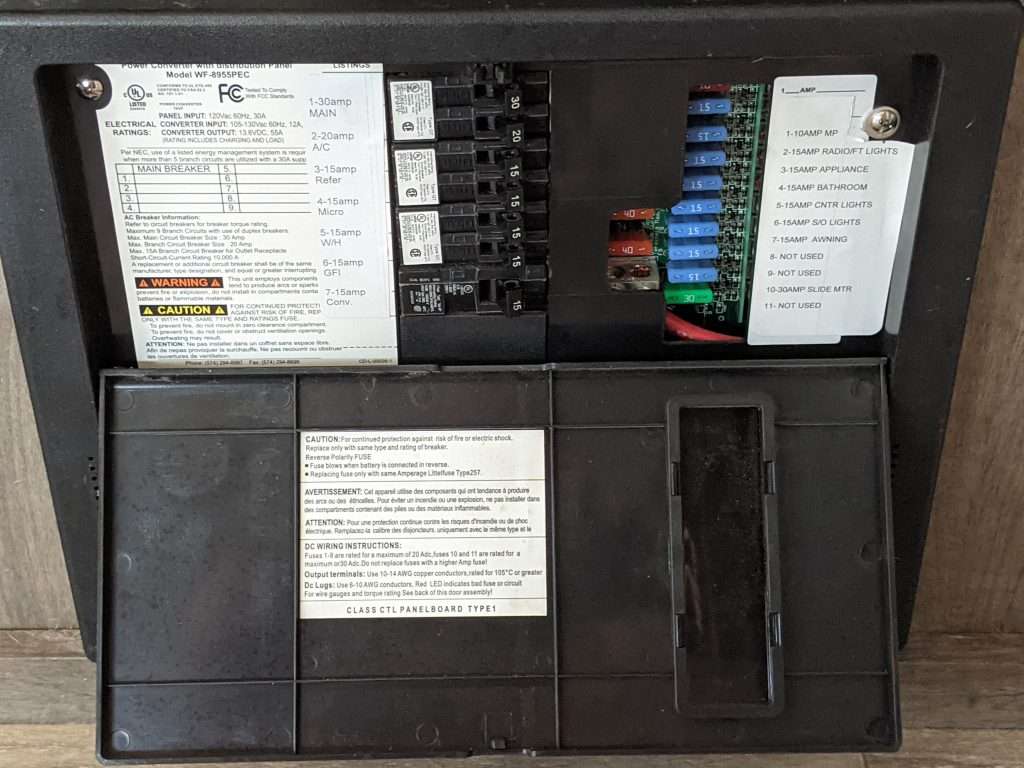
You can check the fuse box in your RV. If the fuse was blown, but replace it, and things should go back to normal. If in that location's a short, y'all tin can try to find it with your multimeter. Supercede any faulty fuses and splice shorted wires. Depending on the state of affairs and your comfort level with wiring, you might need professional person assist.
Note that when the furnace reaches the desired temperature, the blower fan will continue to operate for a short fourth dimension to bring the furnace temperature downwards. This is a safe factor that's office of normal operation.
More RV Repair and Maintenance Articles You'll Enjoy:
Furnace Not Working on Battery (vs. Shore Ability)
An RV furnace should operate solely on 12-volt battery power. If information technology fails to piece of work on battery power merely notwithstanding operates when plugged into shore ability or while a generator runs, the battery is either not charged, failing, or corroded at the connections.

➡ What's the difference between 12-volt bombardment power and shore power? Find out here: How Are RVs Wired? Helpful RV Electrical Basics for Beginners
How to Troubleshoot
Cheque to see if the voltage on the battery is below 12 volts. You shouldn't discharge a lead-acid battery below 12 volts, as this causes battery damage. Charge the battery to total capacity, and the furnace should exist working again.
If your battery won't take a charge or information technology drops in voltage immediately after charging, y'all probably have a faulty battery. Well-nigh auto supply stores volition examination your battery for free. If information technology fails the test, it'southward time for a new battery.
Pro Tip: Installing reliable lithium-ion house batteries volition decrease incidences of RV battery failure.
Do Lithium Batteries Piece of work In Cold Atmospheric condition? Testing Lithium Vs Pb Acid in Freezing Temps
Cheque for battery corrosion at to the lowest degree once a month. If you see corrosion on the posts, disconnect the cables–negative cablevision first–and then clean the posts and connectors. You can buy cleaners explicitly made for bombardment terminals or make your own.
A mixture of 1/four cup baking soda and i-1/2 cups h2o sprayed on the posts and connectors should interruption down the corrosion. Let it sit for a few minutes, so rinse with plain water.
Weak Air Menses Through Vents
Weak airflow through vents is either caused by a blockage, holes, or loose fittings.
How to Troubleshoot
Checking the air intake for droppings is a good identify to kickoff when troubleshooting this RV furnace upshot. If all is clear there, check the ends of the ducts to brand sure they're snugly continued. Finally, follow along the duct, checking for holes or tears. If you find any, apply aluminum record to repair them.
Removing, Cleaning, and Inspecting Our RV Furnace
Note that many furnaces volition not operate without the exterior cover. Then double-bank check the encompass is in place whatsoever time you're checking for airflow or other operations.
Furnace Fan Makes Loud Noises
Fan noise is by and large caused by a fan blade rubbing against the fan housing. Debris or even lint build-up could be the culprit. The fan motor could also make dissonance considering of a loose or bad bearing.
How to Troubleshoot
Showtime, cheque for any droppings or lint in the fan housing; make clean out annihilation you detect. This is as well a good time to put a few drops of light viscosity grease on the fan motor shaft right next to the motor. Spin the fan blades by mitt and listen. If the noise is gone, you've solved the problem.
Pro Tip: Consider investing in an RV vacuum to minimize clay, dust, and droppings in your rig.
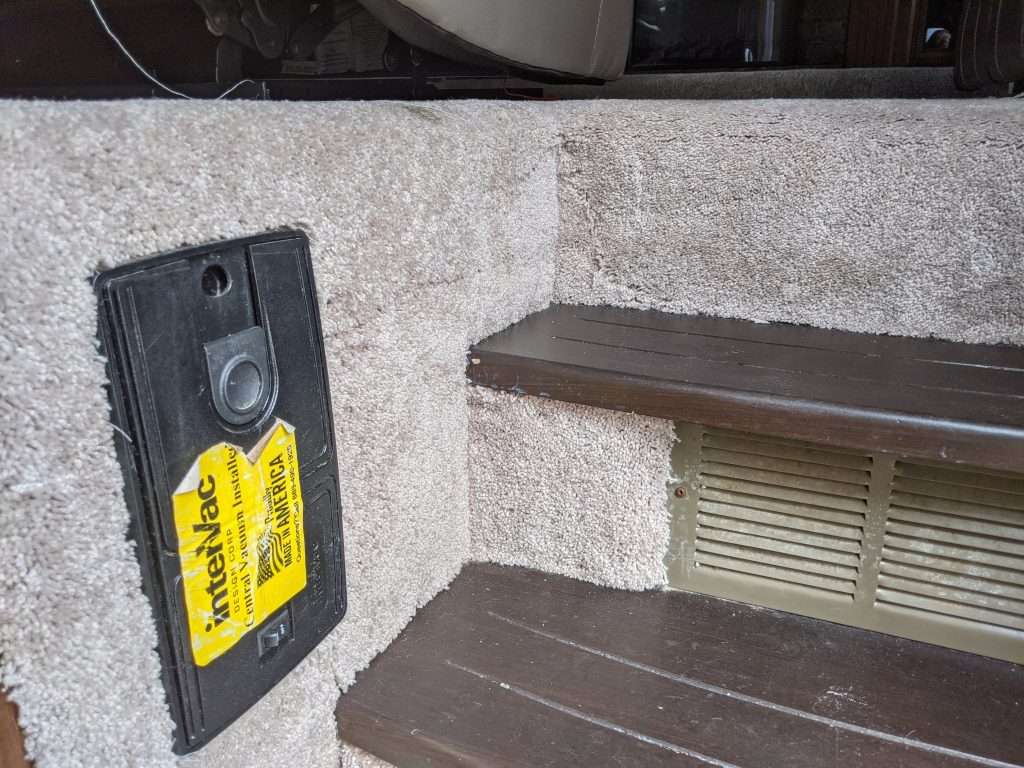
If there's still noise, check the fan housing to make sure it didn't rattle a screw loose. If this is the case, information technology may be as simple every bit tightening the screw so that the housing no longer rubs on the fan blades.
One time y'all've tried the commencement couple steps, if the fan is all the same making a squealing or grinding noise, you lot likely have a loose or bad bearing. At this point, it may be time for a new fan motor.
When Should You Call a Repair Service?
Most of the time, a handy practice-information technology-yourselfer can troubleshoot RV furnace problems and perform many repairs. But there are times when calling a professional is the best and safest option.
If you detect soot on the exhaust vent, information technology'due south time to call in the pros. Soot is an indication that there'due south a combustion problem, which tin be extremely dangerous and cause a burn. It tin can likewise cause carbon monoxide–an odorless gas that's deadly if inhaled.

Regularly test your carbon monoxide detectors and watch for soot in the exhaust vent to preclude this. If y'all discover carbon monoxide or run across soot on your external exhaust vent or elsewhere on your furnace, immediately shut it down and take a professional person technician audit it.
RV Furnace Troubleshooting:
The shelter of an RV and the added comfort of an RV furnace can make your travels extremely enjoyable. It's much easier to explore the outdoors, peculiarly in the chillier months, when yous know you lot can return to your rig and warm up in minutes.
Withal, anyone who has traveled for any amount of time in an RV knows that at that place are no guarantees that everything will go smoothly.
This is especially true for an appliance with several integrated parts, like an RV furnace. But with the troubleshooting tips you just learned, your RV furnace should operate for long periods with fewer instances of trouble.
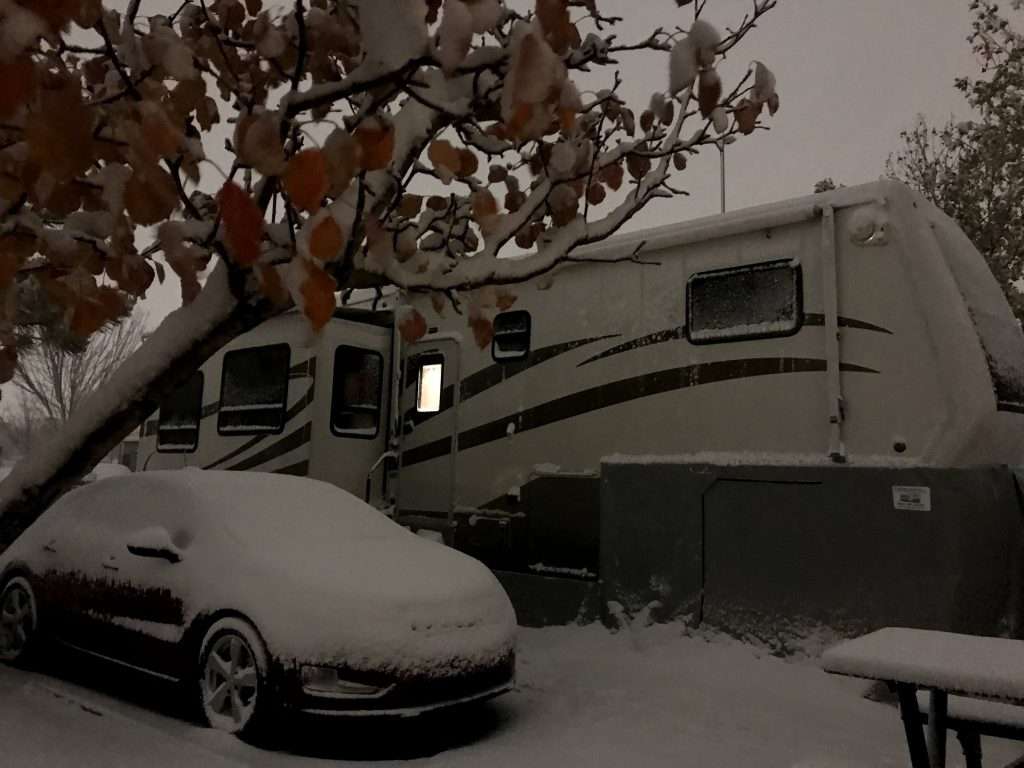
And even if y'all do accept issues, you soon will be more capable of returning your RV furnace to full functionality and staving off a chilly dark in your rig.
Another appliance RVers unremarkably need to repair is the refrigerator. Larn how to fix your RV fridge here: RV Fridge Non Getting Cold? Effort These Troubleshooting Tricks
Become A Mortons On The Motility Insider
Join 10,000+ other adventurers to receive educating, entertaining, and inspiring manufactures about RV Travel Destinations, RV Gear, and Off-Grid Living to jump-start your adventures today!
Read More From The Mortons:
Source: https://www.mortonsonthemove.com/rv-furnace-troubleshooting/
0 Response to "what kind of bearing do i need to fix an rv furnace"
Post a Comment