Baby Screams an Hour After Feeding 7 Months
Did y'all imagine watching your new bundle of joy gently slip off to sleep in your arms while eating? Is your reality a screaming baby who can't seem to get comfortable later on feedings?
It happens more ofttimes than you think. There are a few reasons your babe might exist feeling discomfort post-feedings.
In this article, we'll await at some of the main causes why your baby cries after feeding — and some techniques you tin can use to brand your baby more comfortable.
Why Do Babies Cry Subsequently Feeding?
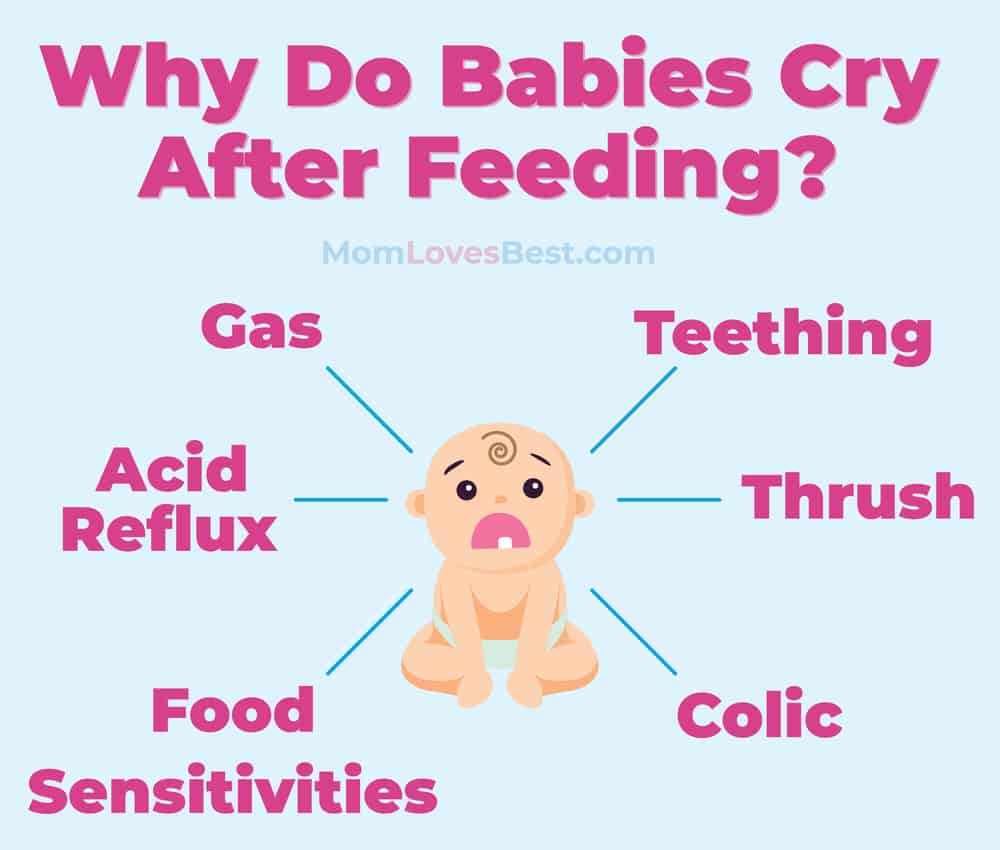
Take you been dealing with an comfortless kid later feedings? You may notice some of the post-obit symptoms of abdominal discomfort:
- Crying: Babies seem to feel more discomfort during the evening hours. If you've heard the weep before, you lot know information technology'south unmistakably a cry of pain. In that location is an urgency and intensity that suggests information technology's more merely lament.
- Pulling upwards or extending their legs: Is your baby bringing its knees upward to its chest or fully extending its legs in a rigid manner? They are likely experiencing abdominal pain.
- Distended bellies: Much of postal service-feeding discomfort tin can exist linked to an excessive amount of gas in the baby'due south arrangement. If it's trapped in their digestive system, it may lead to a hardened or swollen tummy. Their crying may be exacerbating the discomfort they're already experiencing.
Many things may exist causing the discomfort your baby is experiencing. While this is not an exhaustive list, nosotros'll look at some of the main causes of digestive discomfort for immature babies.
1. Colic
Perchance you've heard a baby referred to as colicky. Your pediatrician may have even given yous the diagnosis. This is a designation that came virtually after a pediatrician's report on extremely fussy children and has been effectually for decades.
Having a babe who's colicky basically means you have a babe who cries — a lot. You can expect a baby with colic to cry at least three hours a day for at least three days a calendar week (1). Using this definition, nearly a quarter of all infants will experience colic.
The expert news is that 50 percent of babies with colic outgrow the condition by the fourth dimension they're three months old. By the time your babe reaches ix months old, there'due south a ninety percent adventure they'll have outgrown the colic.
At that place'south usually no discernible cause for colic. It's clear, though, that your baby is uncomfortable. This discomfort is typically linked to the digestive system and follows feedings.
You may need to hold your colicky baby more often and provide lots of comfort. While it can be nerve-wracking and frustrating, having a colicky baby doesn't mean your baby is unhealthy.
ii. Acid Reflux
As well known as gastroesophageal reflux illness — GERD — acid reflux is a common crusade of mail-feeding discomfort. It can be upsetting to hear your baby is experiencing reflux. But reflux isn't uncommon; information technology affects upwards to 50 percent of babies during the first few months of life.
If your child is suffering from GERD, there may exist additional accompanying symptoms, similar difficulty gaining or keeping on weight. Children with GERD spit up — and even feel aggressive vomiting — often too (two).
When your child is experiencing acid reflux, it'southward unremarkably because the gastrointestinal system is not working properly. If the difficulty your baby is experiencing is just related to an immature digestive system, a child may outgrow GERD. When this happens — every bit it does for about 95 percent of children — it usually does so past their first birthday.
There'southward besides a remote possibility your baby volition non outgrow GERD. If this is the case, your md can help y'all create an ongoing handling plan to support your kid's needs. If you suspect your child has GERD, yous should make an engagement with a pediatric gastroenterologist to hash out your concerns.
3. Gas
Another common reason babies cry later feeding has to do with gas. Babies' bodies are notwithstanding developing their basic skills. A baby who swallows too much air during feedings may non be able to procedure the extra gas easily.
This leads to pressure and distension and can cause crying and farthermost discomfort after meals. It may not be possible to continue your babe from taking in as well much air during feedings. In that location are, nonetheless, some things you can exercise to go on air intake to a minimum:
- Frequently burp your baby: Burping can help remove some of the backlog air from your baby'due south system and leave them feeling more comfy. To successfully burp your babe, hold them upright, supporting the head well, and pat or rub their back. Some babies seem to burp a lot, while others might have ane skillful burp per feeding.
- Feed in a more upright position: Keep your baby upright for at least 20 to 30 minutes after meals, to cut down on gas discomfort. If your niggling one is uncomfortable during slumber, you tin also try an inclined mattress — post-obit prophylactic sleep guidelines (3).
- Cycle your baby's legs: If your baby is visibly uncomfortable, you can lie them on their back and cycle their legs as though they're riding a wheel. This can help push the air through their system and provide them with some relief.
- Endeavour to grab the crying early on: It can be tempting to let your baby work through the crying and get to sleep. If it's likely your child won't stop, intercept the crying as soon as possible. Crying normally involves gulping air, which volition lead to more than gas — and more crying.
- Don't put your baby to sleep directly later on a large repast: We all know sleeping on their back is what's best. But if you lot put a baby downwards on their dorsum with a full stomach, it can be a recipe for discomfort. Agree your little one for twenty minutes post-feeding, even if they're already asleep.
These approaches are cracking whether yous're nursing or formula feeding. Nevertheless, in that location are some specific things you'll want to wait out for, depending on how you feed.
Nursing
- Pay attention to how you swallow: What you lot eat directly impacts the milk you make. Sure foods are notoriously difficult for your baby to interruption down, including broccoli, beans, and onions. If yous notice gas is especially bad for your baby subsequently you lot swallow a particular type of nutrient, y'all can limit information technology in your diet.
- Food sensitivity: It's possible that something in your diet is making your babe fussy. The virtually common culprits are dairy and caffeine. Usually, there are boosted symptoms. Keeping a food journal may aid you pinpoint the offending item and then you lot tin eliminate it from your nutrition.
- Nurse your babe in positions that keep their caput above their stomach: This will aid limit the corporeality of air intake and encourage digestion to have place.
- Get rid of the excess gas: Plan on burping your baby earlier switching sides and after feeding.
Bottle Feeding
- Pay attending to the bottle nipple you're using: If your bottle nipple is releasing fluid more than quickly than your infant can comfortably eat, they will guzzle their meal. This leads to an increase in air intake and plenty of gas. Using a slow-menses nipple can help avert this trouble.
- Position your bottle properly: Make sure your bottle is tilted enough to allow the milk to cover the nipple completely. This will assist prevent your baby from sucking in the air that's in the bottle along with their meal.
- Force out the extra air: Expect to burp your baby after every ounce of milk or formula consumed.
Gas can be highly uncomfortable for your piddling one. Following these tips will help you mitigate gas and discomfort for your baby.
4. Food Sensitivities
It'due south possible that some of your child's crying after eating is related to an intolerance or allergy.
Everything you lot swallow is passed on to your child in your milk. Some foods — like dairy and eggs — are oft associated with food sensitivities (4).
If you're nursing, the best way to determine what's agitating your child is by charting your food intake. Continue a food journal and you may exist surprised at where correlations brainstorm to announced.
Early on, my youngest was comfortless afterwards the last repast of the twenty-four hour period — merely when the time came to settle into sleep.
The common link to the discomfort? Spicy nutrient and cheese during my dinner. I cut back on those and my baby was happier for information technology.
Nosotros were fortunate that our infant was just intolerant of these foods and didn't have a true allergy — sometimes a young arrangement has difficulty treatment certain foods. If your child has a truthful allergy, you'll notice more symptoms than only intestinal distress.
Exist on the lookout for hives and skin rashes, vomiting, diarrhea, difficulty breathing, and any face or tongue swelling (v). If y'all suspect your child has an allergy, you should consult your pediatrician immediately.
When starting solids, always introduce one new nutrient at a time to your little one to easily determine what might take caused the response.
Formula feeding your baby? If you lot observe signs of a food allergy earlier introducing solid foods, your baby may be allergic to the formula (nigh usually the cow's milk protein). If you think this might exist the case, piece of work closely with your pediatrician to determine a suitable alternative formula.
Other Reasons For Crying Later on Eating
Many causes of mail service-feeding crying come back to the digestive process. They aren't the only reasons, though. Some other things may cause your babe to cry.
v. Teething
Most babies will begin teething between iv and 6 months of historic period. This doesn't guarantee the teeth will testify upwardly before long later, though. Some babies could become through several months of teething before the teeth break through the gums.
Unfortunately, during this time your child is likely to experience inflammation and extreme discomfort in the mouth and gums. This can make even usually benign experiences, similar nursing or bottle-feeding, incredibly painful.
If your baby is experiencing teething-related hurting, y'all can help past numbing the gums with cool water before feeds. Just dip your pollex in water and rub directly onto the gums (6). Or, let them chew on a washcloth that has been wet and then frozen.
Other pain management approaches can include numbing oral medications and anti-inflammatories (though you'll want to ask your babe'southward doctor before using these). You'll besides want to provide plenty of opportunities for your baby to practice gnawing on things. This can help relieve the force per unit area and accept teeth breaking through a petty more rapidly.
vi. Thrush
Babies can feel an overgrowth of yeast in their oral cavity (7). While Candida is normally nowadays in your body and in your babe'due south mouth, excess yeast tin can exist a problem. It'due south extremely uncomfortable and may be impacting your baby'southward ability to eat properly.
Excess amounts of yeast frequently happen subsequently a course of antibiotics. Antibiotics will kill off the bad leaner, but they don't discriminate. This means skillful bacteria can be killed off as well, leaving an imbalance that can lead to thrush.
Thrush is unremarkably a visible condition — if you doubtable your baby has thrush, expect within their oral fissure. If thrush is nowadays, you'll see filmy white patches that may wait like milk. If the patch doesn't come away with a swipe from your finger, you're looking at thrush.
If your baby has thrush, make an date with your pediatrician. A simple course of prescription antifungal medication will help clean up the condition.
Yeast is quite persistent. If you lot're dealing with thrush, plan on sterilizing every plastic nipple or pacifier you own to forbid recontamination. Nursing? You'll need to be treated for thrush also — or y'all will simply pass the infection back and forth between yous.
Source: https://momlovesbest.com/baby-crying-after-feeding
0 Response to "Baby Screams an Hour After Feeding 7 Months"
Post a Comment